
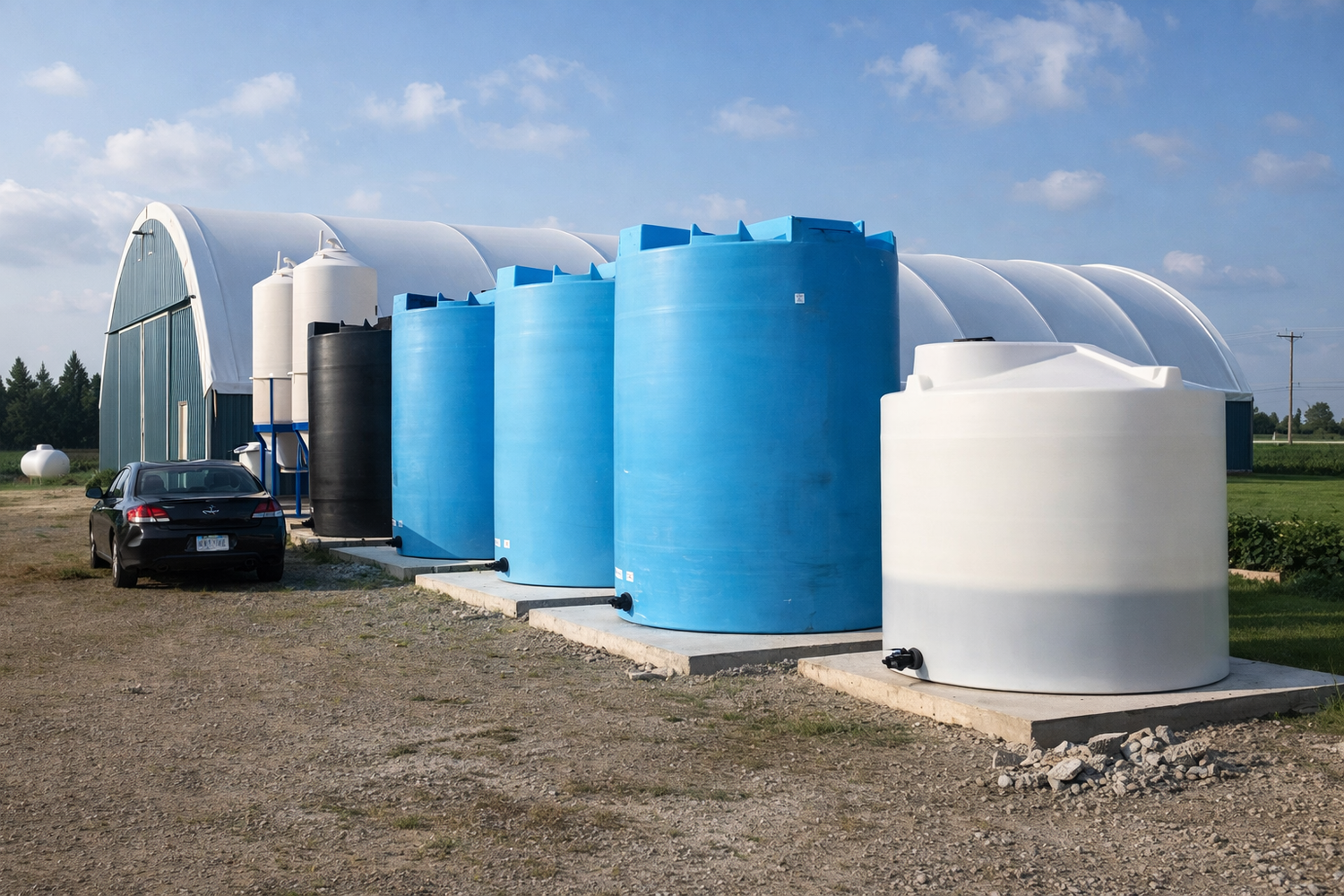
Why Tank Color Matters — and How the Industry Actually Uses It
When choosing a poly tank, color can feel like a cosmetic decision. In reality, tank color affects heat buildup, UV exposure, product stability, algae risk, and long-term durability.
That’s why across agriculture and industry, tank color isn’t random — it’s driven by decades of real-world use.
At Tank Outfitters, we recommend tank color the same way the industry does: based on what you’re storing, where the tank sits, and how long it needs to perform.
The Three Most Common Tank Colors (And Why Each Exists)
White / Natural Poly Tanks
What it is: Unpigmented polyethylene that allows light to pass through. This color is safe for potable water.
Why the industry uses it:
- Easy visual level checks without gauges
- Common for indoor installations
- Often used where tanks are frequently monitored or rotated
Industry trade-offs to know:
- Allows light in, which can result in algae growth in outdoor water storage
- Lower UV resistance than pigmented tanks
- Greater temperature fluctuation in direct sun
Typically used for:
- Indoor storage
- Potable water storage
- Short-term water storage
- Chemical storage where algae isn’t a concern
- Applications where visual inspection matters
White tanks are popular for convenience and flexibility — but not necessarily the first choice for long-term outdoor storage.
Black Poly Tanks
What it is: Polyethylene blended with carbon black for maximum UV resistance.
Why the industry uses it:
- Best UV protection available
- Completely blocks light, removing the risk of algae growth
- Extremely durable in harsh outdoor environments
Industry trade-offs to know:
- Absorbs the most heat in direct sun
- Can raise liquid temperature significantly
- Requires gauges or sight tubes for level checks
Typically used for:
- Long-term outdoor water storage
- Harsh sun exposure (open fields, southern climates)
- Applications where maximum durability outweighs temperature concerns
Black tanks are chosen when longevity and UV protection are the top priorities, and heat sensitivity is not.
Blue Poly Tanks
What it is: Pigmented polyethylene that blocks most light while reflecting more heat than black. Often considered the industry “heavy duty.”
Why the industry favors blue:
- Strong UV resistance without excessive heat absorption
- Significantly reduces algae risk
- Keeps contents cooler than black in direct sun
- Proven compatibility with liquid fertilizers
Typically used for:
- Liquid fertilizer storage
- Outdoor agricultural tanks
- Non-potable water storage
- Applications where temperature stability matters
Across agricultural retailers, co-ops, and farms, blue is the most common color for liquid fertilizer tanks. It’s commonly sold as “heavy duty” (often 1.9 specific gravity) not by coincidence, but because it performs well in real conditions.
Why Blue Is the Fertilizer Industry Standard
Liquid fertilizers are often stored outdoors, full for long periods, in direct sunlight, and at higher specific gravities. Over time, the industry has learned that blue tanks strike the right balance:
- Less heat buildup than black tanks
- Less light penetration than white tanks
- Reduced thermal expansion and wall stress
- Better long-term stability for nutrient solutions
That’s why if you walk a fertilizer yard, blue tanks dominate.
At Tank Outfitters, when a customer says “liquid fertilizer,” blue is typically our starting point unless there’s a specific reason to choose another option, such as indoor storage. Browse Tank Outfitters collection of Fertilizer Tanks.
How Tank Color Affects Real-World Performance
Heat & Expansion
Darker tanks absorb more heat. Warmer liquid expands, increasing wall stress, fitting movement, and long-term fatigue on the tank.
For fertilizer and chemical applications, minimizing unnecessary heat cycling improves both tank life and product stability.
Light Exposure & Product Quality
- Water + light = algae
- Fertilizer + UV = gradual degradation over time
- White tanks allow more light in
- Blue and black tanks limit exposure
This is why industry norms favor pigmented tanks for outdoor storage.
Inspection & Yard Safety
In many yards, color conventions help reduce mistakes and keep operations simple:
- Blue = fertilizer
- Black = water / general storage
- White = chemicals / indoor / short-term
While not a regulation, this convention can reduce operator error, improve yard clarity, and help new employees identify intended use cases quickly.
How to Choose the Right Color
Ask yourself:
- Will the tank sit indoors or outdoors?
- Is the liquid heat or light sensitive?
- Do I need visual level checks?
- Is this short-term or long-term storage?
If the tank is outdoors and holding fertilizer or water long-term, the industry overwhelmingly favors blue or black — with blue often being the best balance. If the tank is stored indoors, white can offer flexibility, including potable water use and broader fit across common applications.
At Tank Outfitters, we don’t just sell tanks. We engineer safe, long-lasting storage systems built for your exact application. Browse our collection of tanks for every application, don't forget to add all the accessories needed for the job, and contact our team of experts if you have any questions about what you need.