
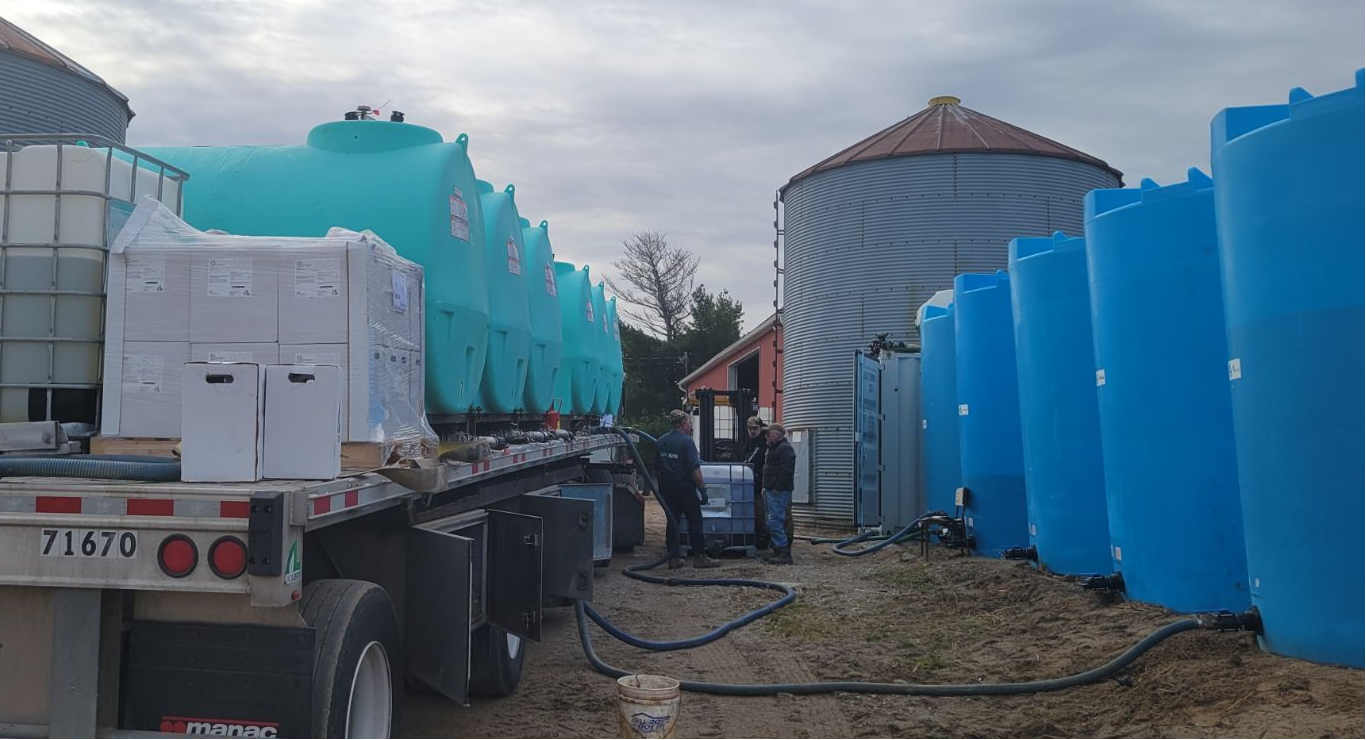
Liquid fertilizer tanks are a common piece of equipment on many farms, but choosing the right one involves more than just picking a tank size.
Liquid fertilizers are heavier than water, and that extra weight creates additional pressure on the tank walls. If the tank isn’t built for the job, it can lead to long-term deformation, stress cracks, or premature failure.
If you are storing products such as UAN 28, UAN 32, Ammonium Thiosulfate (ATS), 10-34-0, or other liquid fertilizer blends it’s important to choose a tank that is rated to handle those loads.
At Tank Outfitters, we generally recommend 1.9 specific gravity (SG) heavy-duty tanks for fertilizer storage because they provide additional strength and long-term durability compared to lighter-duty tanks.
This guide walks through the key factors farmers should consider when purchasing a liquid fertilizer storage tank.
Start With the Fertilizer You’re Storing
Different liquid fertilizers have different weights.
For example:
Fertilizer |
Approximate Weight |
| UAN 28 | ~10.7 lb/gal |
| UAN 32 | ~11.1 lb/gal |
| ATS | ~11.2 lb/gal |
| 10-34-0 | ~11.6 lb/gal |
For comparison, water weighs 8.34 lb per gallon.
This means fertilizer places more pressure on the tank walls, which is why tanks used for fertilizer storage must be rated for heavier liquids.
Understand Specific Gravity (SG)
The strength of a poly tank is measured using specific gravity (SG). Specific gravity tells you how heavy of a liquid the tank is designed to hold.
Typical ratings include:
Tank Rating |
Maximum Liquid Weight |
| 1.5 SG | ~12.5 lb/gal |
| 1.9 SG | ~15.8 lb/gal |
Many liquid fertilizers technically fall within a 1.5 SG rating, but most agricultural experts recommend choosing a tank one rating higher than the minimum required.
This provides a safety margin and improves long-term durability.
Why Many Farmers Choose 1.9 SG Fertilizer Tanks
A 1.9 SG heavy-duty fertilizer tank provides additional margin and flexibility.
Benefits include:
Extra strength
Thicker tank walls reduce stress caused by heavy liquids.
Longer service life
Fertilizer tanks are often kept full for extended periods, so stronger tanks maintain their shape better over time.
More flexibility
A higher rating allows you to store heavier fertilizer blends if your fertilizer program changes later.
Better performance on larger tanks
As tank size increases, the hydrostatic pressure inside the tank increases as well. Heavier-duty tanks handle that stress better.
For these reasons, many farms prefer 1.9 SG tanks even when 1.5 SG technically works.
Choosing the Right Fertilizer Tank Size
Tank size typically depends on:
- Acreage
- Fertilizer delivery schedules
- Application timing
- Available yard space
- Transfer equipment setup
Common fertilizer tank sizes include:
- 500 gallon
- 1,000 gallon
- 1,500 gallon
- 2,500 gallon
- 3,000 gallon
For larger storage systems, farms sometimes consider:
- 5,000 gallon
- 6,000 gallon
However, at Tank Outfitters, we often recommend a different approach.
Instead of one very large tank, many farms run two tanks linked together, such as:
- 2 × 2500 gallon tanks instead of a single 5,000 gallon tank
- 2 × 3000 gallon tanks instead of a single 6,000 gallon tank
This approach has several advantages:
Often more cost-effective
Mid-sized tanks are typically cheaper to manufacture and ship than very large single tanks.
Built-in risk protection
If something unexpected ever happens - like a valve failure, plumbing issue, or the rare but very real farm accident involving a loader or forklift - you only risk losing half the product instead of the entire tank. Think of it as a built-in insurance policy for your fertilizer storage system.
More operational flexibility
Two tanks allow you to:
- Store two different fertilizer blends
- Keep one tank in reserve
- Clean or service one tank while the other stays in use
For many farms, splitting larger storage into two tanks simply makes the system more practical and resilient.
Plan the Tank Location Carefully
Where the tank sits can be just as important as the tank itself.
A good installation should consider:
- Easy truck access for fertilizer delivery
- A level base (concrete or compacted gravel)
- Room for pumps and plumbing
- Distance from wells or waterways
- Protection from loaders and farm equipment
Some farms also install secondary containment or berms as an additional safeguard.
Don’t Overlook Fittings and Plumbing
The tank is only part of the system.
A typical fertilizer storage setup may include:
- Outlet fittings
- Ball valves
- Transfer pumps
- Fill lines
- Vent caps
- Hoses or piping
Make sure plumbing is properly supported so the weight of pipes and valves does not put stress on the tank wall.
Consider Cold Weather Storage
In colder climates, some fertilizers can crystallize at low temperatures.
Examples:
- UAN 32 can salt out around 32°F
- UAN 28 around 0°F
This does not usually affect the tank you purchase, but it may influence how long fertilizer is stored in the tank during colder months.
New vs Used Fertilizer Tanks
Used tanks can be risky if the original rating is unknown.
If the specific gravity rating tag is missing, it can be difficult to determine what the tank was designed to hold.
For fertilizer storage, many farms prefer new tanks with clearly labeled SG ratings and manufacturer specifications.
A Simple Rule of Thumb
When buying a fertilizer storage tank:
Choose a tank rated for the heaviest product you might store - then go one rating higher if possible.
That is why Tank Outfitters typically recommends 1.9 SG heavy-duty tanks for fertilizer storage.
They provide:
- Extra durability
- Flexibility for future fertilizer blends
- Greater long-term reliability
Need Help Choosing a Fertilizer Tank?
If you're planning a fertilizer storage setup, Tank Outfitters can help you choose the right tank based on:
- Fertilizer type
- Gallons needed
- Tank location
- Plumbing setup
Our 1.9 SG heavy-duty tanks are designed for demanding agricultural use and long service life.
Have any questions about your fertilizer storage setup? Contact one of our experts today.